Saturday, 28 June 2014

Theology Football Squad

This world cup I have really enjoyed. The games are exciting, the teams tend to have an attacking philosophy and there have been lots of goals. Given the joy it has brought, I have decided to combine it with my studies to come up with a theology football squad. So without further ado, here it is.

Theologians United: Starting Eleven

Defence


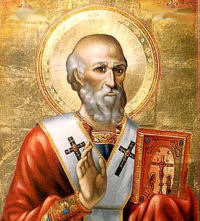
Goalkeeper – Athanasius of Alexandria

A world class keeper, Athanasius is a stalwart shot stopper. This was vicariously demonstrated at the Nicene Cup, where he saved attempt after attempt from the talented playmaker Arius. With a determined yet composed mind-set, this boy’s courage in the face of adversity makes him the first name on the team sheet.


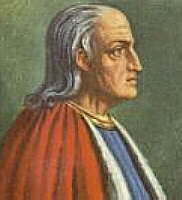
Right-back – Anselm of Canterbury

This player will never settle for anything less than the greatest conceivable result. Always to be relied upon, Anselm will not be satisfied with his performance without a complete sacrifice on his part, as demonstrated by his excellent marshalling of inform striker Guanilo last week.


Centre-back – Thomas Aquinas

Coached by Aristotle, it is no shock that he is at the heart of the defence. Don’t be fooled by his analogical interviewing style – this man is the real deal. Aquinas’ natural ability manifests itself in working with the players around him up towards the desired victory. His athleticism, ability to read the game, strength, speed and his prolific goal-scoring from set plays are just five proofs of why he should be in the team.


 Centre-back – Augustine of Hippo

Following a disastrous move from city to city and his latest off-pitch confession, it is a real surprise Augustine has made the starting line-up. Having overcome his original sins, it was thought he had turned a corner, but recent events suggest otherwise. However, his past record of being able to ascend to lofty heights from even the darkest moments of his career may have inspired the manager to choose him, knowing that a bit of grace is what this player needs to shine.


Left-back – N. T. Wright

This lad has offered a fresh, new perspective on how to be a left back, causing a division of opinion amongst commentators and players alike. Having had his techniques undermined and exploited by strikers Piper and Carson, in recent seasons Wright has had to reign in his novel approach and has begun to incorporate more traditional elements to his game. Nevertheless, with a tremendous output, jovial attitude and vast experience, the opposition must be wary of his prowess.


Midfield


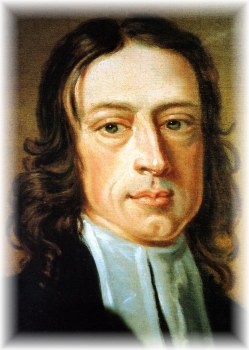
Right Midfield – John Wesley

Something of a perfectionist, this winger has developed his game to a high standard. Having been ridiculed for his training methods, his play has silenced the critics with its sublime organisation combined with exuberant performances. His roaming attacks strangely warm the heart, igniting a spirit of attacking football.


Central Midfield – John Calvin (Captain)

Having instituted a reformation in the fortunes of Geneva United, it was predestined that Calvin would have his name on the team sheet. Having had triple honours at club level, it is now time for him to make his mark on the world stage. Emphasising simplicity, this man’s ability to dictate play and allow others to build upon his work is impeccable.


Central Midfield – Karl Barth

A revelation of late, this dogmatic midfielder plays off Calvin and gets stuck into the action. Following the manager’s word, he is a reliable, yet visceral player, enforcing his side’s dominance. However, this abrasive style can often cause dialectical dischord between him and his fellow teammates.


Left Midfield – Cornelius Van Til

It was presupposed before this column that Van Til would be selected, as his skill is truly transcendental! Through this one man, many other players are united through his excellent distribution of the ball, electric movement and game management. One risk with his selection may be his long time feud with Barth, ignited by Van Til calling him irrational after a club match.


Attack


Forward – Martin Luther

The manager’s faith in Luther has been fully justified as he has had some stunning performances of late. Only he can grace the pitch with such speed, aggression and skill. A great communicator, Luther leads by example and inspires others to get the best out of their attributes. However, he does not see the coach as the final authority on tactical matters, which could prove a problem if he disagrees with the manager’s interpretation on how to win the game.


Forward – Soren Kierkegaard

Whilst his form is objectively uncertain, this player’s subjective commitment to the cause is unquestionable. Modelling his style on the father of football, Abraham, Kierkegaard is a classic centre forward. Regardless of the guise he has assumed, he always pops up in the right position to score. However, with his fragile temperament, it was a leap of faith on the manager’s part to pick him for this important match.


Tactical View


Substitutes and Management

Basil the Great, Gregory of Nazianzus and Gregory of Nyssa all find themselves on the bench today. Whilst these three persons have a perichoretic chemistry, the nature of team does not suit their ticci-tacca style. However, if the team needs a change, these top players of Cappadocia F.C. all have a lot to give.


Also substitutes are Gustavo Gutierrez and Leonardo Boff. A liberating presence on the team, these two attackers can open up oppressive defences to great effect. However, the beautiful game requires a revolution before they truly have a place in football.


Duns Scotus may make his debut today. This lad’s nominal quality is far exceeding most others, with his precision passing a delight to observe. His presence on the park is universal, and his ability to formally distinguish the flaws in the opposition is a marvel to behold.


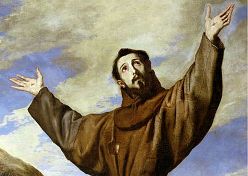
In form striker Francis of Assisi is on the bench. Whilst he spends his time with lots of birds, this man’s charity on the ball is to be admired. Moreover, his work ethic is to be praised, carrying on even when he is faced with stigmatic injuries.


Manager – Paul of Tarsus

No one else could manage a side with so many big names. Having been a world class player, being an extremely zealous footballer, Paul has brought that ethic into his management, encouraging his players to unite in spirit. Moreover, he has successfully coached Thessalonica F.C., Corinthians, Ephesus United among other clubs. Recognising that a team is like a body, he has a good balance to his squad’s. Yet most importantly, he engenders a philosophy within his players to be living sacrifices for each other.

Do you agree with this selection? Who would you choose? Leave your comments below, and thanks for reading.


Thanks to my father for contributing to some of the selections.

Saturday, 14 June 2014

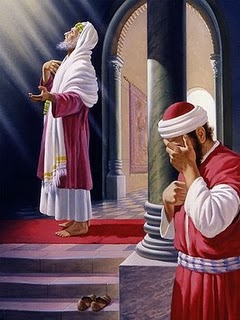
Confessions of a Modern Day Pharisee

I am a righteous man. Or at least that is what I like to believe. I go to church, praise the Lord, I help where I can. I condemn those who do morally wrong (just see my old blog!), exhort the Mosaic Law and rigorously defend truth. Along with the great spiritual masters I stand, defending the faith, glorifying God through my actions for all to see. Indeed, even this article of mine shows how much I love God.

And that is why I am a sinner. In my younger years, I zealously tried to enforce the Biblical teachings, reprimanding those who endorsed false doctrine and rebuking they that sinned against God. And despite His grace, I am still tempted daily by such activities. Little do I know that I fall into both camps.


The good news is that through Jesus of Nazareth, God has provided salvation for us on condition of faith (2 Corinthians 5:19). That is, the grounds of our right standing before God are the life, death and resurrection of Christ, which is communicated to us by the gift of faith (John 3:16). This is a momentous message! To be free of the shackles of wrongdoing, enslavement to evil and fearing God’s holy justice (which all deserve for doing that which is erroneous), one cannot do anything. Mired in our own folly, we are unable to give to God what he is owed, having done that which is contrary to the good, and thus are servants of evil and deserve death. There is no action on our part, no set of commands or any formulae which can get one out of this mess. However, out of his grace, God has provided in the sacrifice and representation of Jesus all that one needs to be restored to relationship with him. This is achieved through participation in his righteous life, death and resurrection, by the indwelling of the Holy Spirit, and the atonement of our sins through Jesus death (Romans 8:1). This not only pays for our transgressions before God, but exacts a transformation of the sinner. No longer are we bound by sin, addicted to misdeeds and evil actions centred on humanity. Rather, we are regenerated to focus on God, not by our own power but by the Spirit (Romans 8:2). Thus, the Gospel proclaims that liberation from the destruction of sin comes through Christ alone, mediated by faith, not our own lack of works or merit.

By contrast, the Pharisaic trite I have propounded is a false gospel. I have argued that one can be their own saviour, implying Jesus died in vain! (Galatians 2:21) You see, what I have done is claim that your standing with God depends on what you do. In the past, I have condemned those who have premarital sex, those who engage in homosexual relationships, those who reject classical and traditional forms of worship, those who lie, those who reject the truth and so on. I justified this by claiming that God detests such behaviour, ranting and raving about how great a sin they were committing. Such a tack was a false gospel: by making the behaviour of a person the deciding factor in how they relate to God, I failed to realise I was removing Jesus from salvation. Christ tells us that he is the way, the truth and the life, and that no person may come to the Father but by him (John 14:6). As we are unable to break free of our transgressions and the power of evil, then we cannot save ourselves. As Jesus rose from the dead, which confers the blessing of God upon him and victory over the power of death, the wages of sin (Romans 6:23), it follows He has, through his actions, enabled others to be reconciled with God. Thus, only through him can we be saved. By putting such emphasis on one’s behaviour, I failed to acknowledge that our deeds have no bearing on our salvation: only the love of Jesus does. So such exhortations were just plainly wrong, as they denied that Jesus was the only grounds of salvation, and that nothing can be added or subtracted from this message without it being a false message.

Moreover, not only have I preached a false gospel, but I have been a hypocrite. Whilst I judged others to be disobeying God, little did I see that I was just a culpable. I too lusted, I too was lazy, I too have born false witness, I too have taught falsity and so on. How I could condemn by brothers and sisters without seeing the gaping big sin and evil in my own life is ridiculous. Indeed, as Jesus challenged the hypocrites of his day, ‘How can you say to your brother, 'Brother, let me take the speck out of your eye,' when you yourself fail to see the plank in your own eye?’ (Luke 6:42). Whilst I recognised others needed Jesus, I failed to see that I did too. And so, without realising it, I perpetuated a life of self-righteousness, pleased with myself and pitying others.


These struggles still afflict me. I am still tempted to judge, placing worldly standards in front of spiritual ones. Living in a world still caught in the grip of the old ways, we are all confronted by dark evils. But thanks to the grace of God, those who are justified by faith no longer live according to the power of sin (Romans 5:1-2). Rather, those who are drawn into Jesus’ righteousness live not by the influence of evil but under the sphere of Christ through the Spirit (2 Corinthians 5:17). As such, thanks to what God has done in my life, two things have changed.


Firstly, through the gift of faith afforded by the Spirit, I now can see my own sin. That is, when those who live in union with Jesus stray from the path, the Holy Spirit enables them to recognise they have committed a heinous act. Through this, he reveals our utter dependence upon Jesus (John 16:8). Our failure to serve God as we ought is drawn out by the fact we sin, and points to the glory of Christ who does righteously love the Father. Thus, it contrasts our ineptitude with Jesus’ holiness. As such, it clarifies the nascent fact that we utterly owe everything to Jesus in sustaining our relationship with the Father, glorifying him even more by our weaknesses (2 Corinthians 12:9). Thus, rather than believing I am righteous according to my own merit, the grace of the Lord changes people through faith to see that they are pretty pathetic in comparison to Jesus, and as such live with him at the centre of their identity thanks to the gift of his Spirit. The gift of God to recognise the sinfulness of the self redirects us to Christ, whom through a relationship of love on his part we can be restored to be worshippers of God.

Secondly, through the gift of faith afforded by the Spirit, I now see that Christ is the only means of salvation. The prior paragraph alluded to this, recognising that the identification of one’s own sin often refocuses us back to Christ. However, it is not only through our own sin we can receive such a wonderful truth. Through the transforming effects of the Holy Spirit, we are freed from notions that anything else can save humanity and the universe other than Jesus. Whilst confronted with temptations and malignant forces attempting to draw us from this truth, the power of the Spirit will always bring us back to Christ, helping us to see that it is His relationship with the Father which counts, not ours, for our standing. The vindication we have before God is not on our account – not even on the faith we have. No, it is grounded in the righteousness of Jesus, which we participate in through faith. This teaches us not to be self-righteous, judge, or demand any extra requirement for salvation. Rather, despite our failings, at the heart of our confession, worship and witness should always be Jesus, the heart of who we are and the cosmos. The transformation wrought by God in those who are saved is to place Christ at the centre of who they are, even if they fail often to appreciate this. And so the evidence of him and his key place in salvation is to be perceived by those living in the Spirit.


So this Pharisee, who is still tempted by the villainies of pride, confesses he is not all he often wants to be, and that ultimately even if he gets it wrong, his, and all salvation, is not acquired by human merit or worthiness, but by Jesus alone on condition of faith. Hence, all the glory and praise should be God’s alone, as our sin testifies too. Thus, this Pharisee asks for your forgiveness, and hopes that his folly will be an example of the glory, mercy and love of God.

Wednesday, 28 May 2014

How can God be both three and one? The logic of the Trinity

‘Hear, O Israel: The Lord our God, the Lord is one.’ (Deuteronomy 6:4). This is the uncompromising confession at the heart of Jewish, Christian and Muslim faith. There is only one God worthy of worship, as there is only one who is the ‘greatest conceivable being’ (Anselm, Proslogion). Thus, we are to ‘Love the Lord your God with all your heart and with all your soul and with all your strength.’ (Deuteronomy 6:5). This is because God is ‘the Good’, and as it is right to love what is good, we should seek to adore the source of all goodness (Plato, Republic, Bk. VII). Thus, as opposed to polytheistic religions which claim there are lots of gods, pantheism which claims the world is god, and atheists who say there is no God, monotheists profess there is but one God of everything.

‘Therefore go and make disciples of all nations, baptising in the name of the Father and of the Son and of the Holy Spirit.’ (Matthew 28:19). This is the ‘great commission’ of Christianity, a command from Jesus after His resurrection to His followers to bring all peoples into the Kingdom of God. Baptism is the ritual of being submerged in water and rising out of it, a response to the grace of God in committing to turn away from one’s previous way of life and following the way of God (Matthew 4:6). Thus, one would only be baptised in name of God, as God is the one who enables such a change to take place in a person’s life (Romans 7:4-6). Yet this entails a quandary, for although God is one, the Christian is baptised under three names: the Father, the Son and the Holy Spirit. The question is, how can God be both three and one?

Last week, I sought to try and articulate the Gospel in a form which is both relevant to a secular context and faithful to the salvation God has wrought in Jesus. I did this by focussing on Paul’s lecture to the Athenians (Acts 17:16-34), which involved dissecting and briefly exploring the different segments of what he proclaimed. At the beginning of his presentation, he argued that there is but one God, which we saw meant there is only one meaning of life, which is to worship the true God. Yet undoubtedly, one will eventually have to say who this true God is – if we are to love Him, we ought to have some idea who the Lord is. The Christian recognises that God has revealed Himself as totally one, yet also as Father, Son and Spirit, and so concludes that God is Triune. Thus, as the heart of the Gospel message is the Trinity, the one God, who has called us away from sin in light of his oncoming judgement. As such, we as a Church ought to give an account of who God is as the Trinity if the question should arise (1 Peter 3:15).

However, this is no easy task. Generations of people have wrestled with the notion that God is three and one, coming to all sorts of conclusions and positions. By its very nature, the concept of being triune seems strange to us, and anyone who seeks to understand more often finds by the end of their quest they know a lot less! Hence, this article will try and offer some reflections on how one might approach the doctrine of the Trinity, why we should believe it is the best account of how God has revealed God’s self and how it is best to be a witness to God as Triune.

1)      What is the doctrine of the Trinity?

The doctrine of the Trinity was officially stated at the council of Nicaea in 325 A.D., and later refined at the Council of Constantinople in 381 A.D. Amongst other issues, the attendees of these meetings sought to identify what it is precisely the Christian community believes about who God is, in light of the ‘Arian Controversy’. Arius believed that God’s nature precludes any change. From this he noted that if God were to become human, as He would have to if Jesus were God, then God would have to change, by taking on the property of being a man. As such, Arius argued Jesus could not be God, because if God’s nature does not allow for change, then He cannot become a man (Letter to Eusebius of Nicodemia). Moreover, the Holy Spirit also could not be God, because the Spirit works within the world, and as everything in the world is subject to change, that must mean the Spirit is subject to change. However, as God cannot change, God cannot be in the world. Thus, Arius concluded neither the Word (Jesus) nor the Spirit is divine, with only the Father being Holy.

This position caused a great deal of controversy within the Church, causing a great theological split. Hence, the council of Nicaea was convened to decide whether Arius was right to claim on the Father was divine. The result did not go Arius’s way, with the council concluding the Father, Son and Spirit are all God (for reasons we shall examine later). But how exactly did they define the relationship between the oneness of God and the Threeness within God?

The Nicene-Constantinople Creed states the following: the Father, Son and Holy Spirit are ‘consubstantial’, yet three distinct ‘hypostases’. Consubstantial means to be of one substance. Hypostases is defined as an ontologically real and distinct person. So the council argued that God is one nature with three persons, or three persons with one nature (whichever way round works for you). You will notice this is primarily a negative definition: it states what cannot be left out of an account of who God is. This is in line with apophatic tradition, which claims at best we can say only what God is not, for as God is beyond human comprehension, we can only say God is not like the things we observe. So for example, if a person says there is more than one God, then they violate the fact that God is a being with one nature, and it cannot be shared across beings. Moreover, if one claims that God is really just one person who plays different roles, that person has made a mistake because any adequate account of God must keep distinct the reality of the three persons. This makes sense, as the council is responding to the Arian Controversy, and was seeking to define the boundaries of what it is appropriate to say about God. However, it does mean that it is not specified how God is three and one (as later theologians tried to do). Rather, it just secures the doctrine of God as being one in terms of nature, and three in terms of persons/centres of agency.

2)      Why should we think that God is Triune?

The doctrine of the Trinity is a response to the revelation of God and trying to understand what God has revealed about God’s self. As we saw at the beginning of this article, Yahweh is revealed as being unique and one (Deuteronomy 6:4), yet as also being three persons (Matthew 28:19). In the life of Jesus of Nazareth we see this most clearly. As an orthodox Jew, Jesus upheld the truth that there is only one God (Matthew 22:36-40).  However, at the same time we observe that there are three, simultaneously coexistening agents who are integral to the acquisition of human salvation: the Father, Son and Holy Spirit (Luke 3:21-22). Indeed, if we take the baptism of Jesus as a microcosm of the whole soteriological process, we can see the inner differentiation within the one God. In His baptism, Jesus identified with sinners and stood with them, taking upon himself their sin and bondage to evil as a precursor for His crucifixion, which would atone for their transgressions and free them from the power of darkness (Romans 6:1-4). And in rising out of the water, we see a foreshadowing of the resurrection, where new life, transformed life, free from death and suffering is drawn out. In this act of ultimate salvation, we see the Father’s vindication, blessing and exaltation (Luke 3:22), the Son’s obedience and sacrifice to the Father on behalf of humanity (v.21) and the Spirit descending upon Him in order to further His ministry and conquest of evil on behalf of the Father (v.22). Thus, we can see in this event the whole story of the Gospel, which revolves around the interplay of the Father, Son and Spirit. This requires their coexistence as the one God.

Indeed, this example of the Father, Son and Spirit’s simultaneous existence delivers an insight into why the Church understood them to be the one, divine God. Of first importance, we should remember that God is uniquely one – there is no other who is worthy of worship. Yet God is also categorically distinct from the world, as God is fundamentally different to the objects and beings we are familiar with. For example, when we say God is one, we do not mean God is like one finger, or one table. We primarily mean there is nothing else like Yahweh, no one else is Holy like Him. Moreover, God is the only one can save humanity and restore us to a right standing before Him (Psalm 62:1). For the Scripture states all have sinned, that no one is perfect and all have done wrong against God (Romans 3:23), which entails that only God can forgive that which is done against Him (Mark 2:7). Hence, only the one, true God can save humanity from its enslavement to sin and the punishment it deserves.

At the same time, we observe that the Father, Son and Spirit are all revealed as being integral to single operation of salvation, performing different functions in the process. All the actions of God find their origin in the Father, they proceed through the Son and are perfected by the Holy Spirit (Gregory of Nyssa, A letter to Abalius). For example, the Father ordains from before the creation who will be saved (1 Peter 1:2), the Son is the one who brings this to fruition through His life, death and resurrection (John 6:35) and the Spirit brings us into participation with the Trinity (Ephesians 3:19). Thus, the Father, Son and Spirit perform the one operation, salvation, whilst taking upon themselves different functions in accordance with their personage.

This leads to the startling conclusion that the three persons of Father, Son and Spirit are the one God. For if we ask what makes it possible that one can save humanity, the answer is that one only has sufficient powers to be the source of salvation if one has a divine nature (is God). Thus, the Father can only save if and only if He is God. Likewise, the Son can only save if and only if He is God. And the Holy Spirit can only save if and only if He is God. Thus, the Father, Son and Spirit must all be God. Yet as there is only one God, the Father, Son and Spirit must not be multiple deities, but the unique, categorically distinct one divine nature. As such, the Church has discerned that because one can only save if one is God, that there is one God and that the Father, Son and Spirit save, it follows the one God is triune. Thus, in virtue of the saving activity of God, we can know who God is. We can summarise this argument in a logically valid form (that is, if the premises are all true the conclusion cannot be false):

1)      There is only one God.
2)      God alone can save.
3)      The Father saves.
4)      The Son saves.
5)      The Holy Spirit saves.
6)      Therefore, the Father, Son and Holy Spirit are the one God.


This argument reveals why we should think of God as Triune. For if God saves as according to the Bible, then we can only make sense of what the Father, Son and Spirit do if we understand them as divine. This should be the pillar of our evangelism when witnessing to who God is, that the ‘economic’ activity of God reflects His ‘immanent’ nature (Barth, Church Dogmatics Vol.1). For whilst we may offer pithy analogies and more positive accounts of how the three can be one, ultimately this goes beyond the doctrine, and can often lead to theological difficulty. Rather, if we ask what is required for one to save, and then show how the one God is revealed as saving in the simultaneously existing Father, Jesus and the Spirit, we can see the inner logic of faith that God must be Triune. This is faithful to the Scripture, whilst also recognising the negative nature of the doctrine: Scripture does not provide an in depth study of how God can be three and one, nor does the Nicene Creed and neither should we, as such thought is mere speculation. Instead, we should affirm that any account of God which does not recognise God is one divine nature with three distinct persons, the Father, Son and Holy Spirit, is inadequate as a response to God’s revelation. So affirm the essentials in accordance with Scripture, for the Trinity explains how God saves the way God chose to save.

Tuesday, 20 May 2014

The Gospel: What is it, and how might we proclaim it?

What is the Gospel? What is the Good News? Why have countless people devoted their lives to such a thing?

The question is always pertinent. In every age we have new contexts to wrestle with. New ideas, new products, new ways of doing things shape the methods in which we think and behave. Thus, old words like ‘sin’, ‘repentance’ and perhaps even ‘God’ change their meanings for many people. Our language changes its usage, and as such old phrases may not convey the same truths as they did when first written.

As such, trying to articulate the Gospel requires the community of faith to constantly reflect upon the concepts and language it uses to express the wonderful joy which has changed their lives. Indeed, upon writing this post I struggled to think of how one might explain the Gospel in a way which most people, if not all could understand in Britain today. Whilst those who are chosen may understand through the assurances of the Spirit, the actual witnessing of the person of Jesus is always difficult in some sense.

However, in this post I will seek to begin a series of articles on the Christian faith and how one might best explain the change in our lives Jesus has made to those of unbelief. So no better place to start then than the Good News!

First things first – pray to the Holy Spirit. Jesus promised Him to us, to empower us to witness and serve God in all we do. As Scripture states:

John 14:26

But the Helper, the Holy Spirit, whom the Father will send in my name, he will teach you all things and bring to your remembrance all that I have said to you.

John 16:12-15

When the Spirit of truth comes, he will guide you into all the truth, for he will not speak on his own authority, but whatever he hears he will speak, and he will declare to you the things that are to come.

Romans 8:26 

Likewise the Spirit helps us in our weakness. For we do not know what to pray for as we ought, but the Spirit himself intercedes for us with groanings too deep for words.

As such, allow the Spirit to lead you when proclaiming the Gospel. In different contexts, He may decide to lead you in one direction with your words, and another way at another time. But I cannot stress enough how much we ought to ask for His leadership in our witness to Jesus. For the Spirit illuminates the teachings and works of Jesus that we are saved, and as such He is the true bearer of the Good News. He does this through Scripture (2 Timothy 3:16-17), signs (1 Corinthians 12:1-12, teaching (Matthew 10:20), and in any other way He pleases. So let us receive His blessing, just as the apostles did at Pentecost (Acts 1:8), and under His love and power sing out the Gospel.

So after all of this, what is the Good News that everyone is so excited about? And how are we supposed to testify to it to non-believers?

Given our secular culture, I believe that the witness of Christ in Paul provides perhaps the best starting place. He was the ‘Apostle to the Gentiles’, those who were not Jewish. As such, his articulation of what God has done was presented in such a way as to make sense to those who did not necessarily understand the finer points of Jewish religion. Jesus’ teachings in the gospels are heavily Jewish – they are laden with Old Testament allusions which the Galilean audience would have understood. Thus, when Jesus proclaimed the ‘Kingdom of God’ (Mark 1:15) the Jewish people he preached to could understand the term. Likewise, the other apostles speak primarily to Jewish audiences. However, our culture has no concept of covenant, kingship, exile and temple which are so intrinsic to His message. This is because the Gospel concerns the return of Yahweh to the world, bringing new life and creation through the Word who is a man, Jesus Christ. But such talk falls on deaf ears. Yet as God is wonderful, the Gospel is not limited to one formula or set of words, and the Spirit, who receives His teaching from Jesus, inspired Paul to communicate the Gospel to certain groups in a less Judaeo-centric way. As such, one is not diminishing the Gospel by not starting with the gospels – all Scripture testifies to Jesus, and as such we should not be ashamed to utilise it all to proclaim His wondrous person (Luke 24:13-35). Thus, the return of the Kingdom of God was taught by Christ in multiple ways, and it is His message through Paul which we may begin.

The passage I will focus upon is Acts 17:16-34 (I would encourage you to read it before you continue). In this extract, the apostle preaches to the Athenian intellectual elite. This was a pagan city, which embraced multiple gods, philosophies and ways of life. The community was by and large gentile, and the intellectuals scoffed at many Jewish ideas (such as the resurrection of the dead v.32). In many ways it was like our own: it understood itself as the beacon of hope as a progressive civilisation, with educated elite dispensing of personal gods in favour of their own wellbeing, seeking their own gratifications and as such worshiping themselves. Yet at the same time, the society continued to preserve religious rituals so as to engender favour from whatever deities they please – appealing to any spirit who may show favour upon the community. This was largely because belief in a deity did not matter in ancient pagan religion, but more the practice of rituals. As such, any god was acceptable, providing it does not infringe upon the Emperor’s rule. And in some ways we are like that too. You often hear people say it doesn’t really matter what you do or who you serve, as long as it doesn’t harm anyone else, or infringe their rights. So Paul was entering a similarly relativistic and self-centred arena as we do today.

Paul begins by remarking that in Athens they are religious people, as they worship a multitude of gods. Indeed, he even found an altar to AN UNKNOWN GOD (v.22-3). Paul, in a rather witty and clever remark, claims he will proclaim the nature of this unknown deity whom the Athenians worship. Of course, our society is not like that anymore: we do not observe people worshiping multiple gods. However, just as gods were relativistic in ancient paganism, the meaning of life has become a matter of subjectivity in the contemporary world. If you ask someone what the meaning of life is, they either answer they don’t know, it depends who you are or 42. It has become the norm to think that I have my purpose, you have yours and they don’t cross paths. And yet, we are aware we have a common good, a goal, an aim, which unites human values and aspirations. We do not just think our way of life is just for me, but we recognise that there are at least some principles which ought to direct all human life (i.e. the principle of not harming another). That is the whole source of conflict: we disagree about what is good. That is, we clash over the true nature of how we ought to behave. However, our culture does not know what this great meaning of life is. The Gospel is such a proclamation – just as it describes the unknown God, we might say that it is the story of the meaning of life.

Paul begins by teaching that there is only one God (v.24). There is not no God, as the atheist claims, nor is there more than one God, as the polytheist argues, but there is only one being deserving of worship, God, who is the greatest possible being (Anselm). And this God is the maker of heaven and earth. That is, this God created everything that exists apart from Godself – the universe and all its components included. Thus, God is not the universe either, as the pantheist claims. And neither are we God, as our sinful natures want us to extoll. No, everything which came into being is not God, for only the creator is worthy of worship. That means God is the creator of us too, giving us all we have had, all we have now and all we will have (v.25). From one man we are all descended (v.26) and our cultures and nations rise and fall at God’s bequest. God did all of this so that we may have a loving relationship with Him, giving Him the praise we owe Yahweh just because of who He is, and by extension so that we might embrace His love for us (v.27). That is, we are made to be in communion with the Lord. This is the univocal meaning of our lives – to love God with everything we have (Matthew 22:36-40).

Following this amazing set of truths, Paul recognises that the Athenians up to this point had not been worshiping the true God. They had treated God like gold, silver or stone, an idol (v.29). We too have done this; we have lived our lives according to our own prescribed meanings of how we ought to live, engaging in behaviour inconsistent with what it means to give yourself entirely for God. For example, lying is antithetical to loving God, as God is the source of all truth, and as such to lie is to slander the sacred nature of who God is, and thus blaspheme against what is holy (Exodus 20:16). Yet we as a community have lied because we have followed a meaning of life which seeks our own interest, mimicking ourselves as God by trying to create a false reality so as to achieve our own ends (I certainly have). By the grace of God, the Lord has passed over such ignorance, but we are now called to repent from such activity and follow Him (v.30) (to repent in the first century world meant to turn away, so it is primarily a decision to change one’s behaviour in light of a new commitment to the Lord).

Why has God called us to turn from following our own false purposes of life and devote ourselves to the true meaning of life? He has done this because He has set a day when He will judge the world through the man He has appointed (v.31). And He has proven this by raising this man from the dead (v.32). What does this mean? To help, it may be useful to turn to 1 Corinthians, chapter 15 verses 1 – 8. In this letter, Paul seeks to reprimand the Christian community in Corinth for multiple reasons, one being their presupposition that the resurrection of the dead has already happened. Thus, in this passage Paul is seeking to explain what it means to be risen from the dead by reference to the first to be raised, Jesus. He begins by reciting a creedal statement which has been dated back to at least five years after Jesus’ resurrection, perhaps earlier (see Hurtardo, Habermas, Ehrman etc.) Thus it is a statement of faith preceding Paul, and one of the earliest traditions of Christian confession. And it is the trust in the truth of this creed and the person it concerns which is saving (v.2).

In short, the creed states that Jesus, the Christ, died for our sins according to the Scriptures. He was then buried, and then raised from death in accordance with the Scriptures, and that He appeared to a number of groups and individuals. The Scriptures are the Old Testament, and so the creed states that Jesus death and resurrection is consistent with the teaching and prophecy of the Torah. That is, His death on the cross and His conquest of death fulfils the message of the Old Testament. Hence, Jesus is the Jewish God returned, fulfilling His promises to the whole world. And He first did this through dying for our sins. You shall remember that in relation to the Athenians, Paul admonished them to turn away from their old practices and trust in the Lord. Those old practices God had passed over, but now that He has set a day for judgement, on that date those violations of what is right shall be brought to justice (Acts 17:31). Thus, all the evil things we have done, such as harming others, wreaking mass havoc and destruction and even the small curses are to be accounted for, and those who enacted them are to face the wrath of God. Our actions separated us from the Lord, and those things we have done must face punishment, as we have violated the sacred and absolutely good meaning of life – to worship God in the entirety of our lives. And the punishment for this is eternal separation from God, damned to hell.

Our situation is terrifying: on the one hand we ought to be in communion with God – that is why we are created. Yet on the other hand, we have no way of returning to that state by ourselves, for we have violated the meaning of life with our own mockeries, and as such are bound by our own misdeeds. However, the Good News of the Gospel is this: the Word of God descended in flesh (John 1:14), Jesus Christ, to take our place as the one man who did fulfil the meaning of life (to love God with one’s whole being), and as such is an adequate substitute for all of humanity, paying for their sins with His life (v.3). Thus, there is nothing we can do to acquire our salvation – only the action of Jesus could save us. This is incredible! The very God who we rebelled against did everything for us so that we might be returned to Him and fulfil our original purpose, which is to be in love with God. This should make us feel so grateful: it is not by our own works, deeds, actions or qualities we are saved (for if it were, we would be the masters of our own election and would be unable to achieve the meaning of life, which was articulated above), but by the righteousness and the love of Jesus. We are totally dependent upon His life, death and resurrection. Praise be all His.

Yet how do we know that this victory over sin and our freedom from it was achieved? This was displayed in God’s vindication of Jesus by raising Him from the death (v.4). That is, God affirmed Jesus’s that He came to save the world, bringing the Kingdom of God, and showed this by raising Him from death. Thus, we can know that we are saved because Jesus is alive and has conquered the evils of this world: death, sin, satan and all the other demons who plague this creation. And we know He is alive because many Christian brothers and sisters witnessed Him after death resurrected. Thus, the Good News is that God has procured our salvation through the death and resurrection of Jesus, so that we might be restored to our primary function, which is to be in communion with God.

However, the story is not quite over. Jesus death and resurrection has saved the creation, bringing what He called the ‘Kingdom of God’. However, whilst this Kingdom has been inaugurated by the life, death and resurrection of Jesus, it has not been completed, and hence the trials and sufferings a Christian must endure (Acts 14:22). The kingdom will be completed with the return of Jesus, who has been raised as proof that He will be the judge of those who have disobeyed the meaning of life. Thus our eternity depends upon whether turn away from our old lives and commit to the person of Jesus, whom through we may come before the Father (John 8:19). And it is through the Spirit we receive such faith – it is the gift of Himself which waters the seeds of belief planted by the Word (Romans 12:3). Thus, the Gospel provides us with hope; the hope that we will be restored to communion with God through the death of Jesus, and that we will be resurrected with Him enjoying life everlasting.

So the Gospel is certainly Good News: it proclaims that we are now able to return to God because of the life, death and resurrection of Jesus, so that we may for an eternity be in fellowship with the Triune God, the author of the meaning of life which we had abandoned. I hope that these reflections on the meaning of life which the Father ordained long before we were born may help your own opportunities to witness the Gospel under the guidance and leadership of the Gospel. Till next time, God bless.